
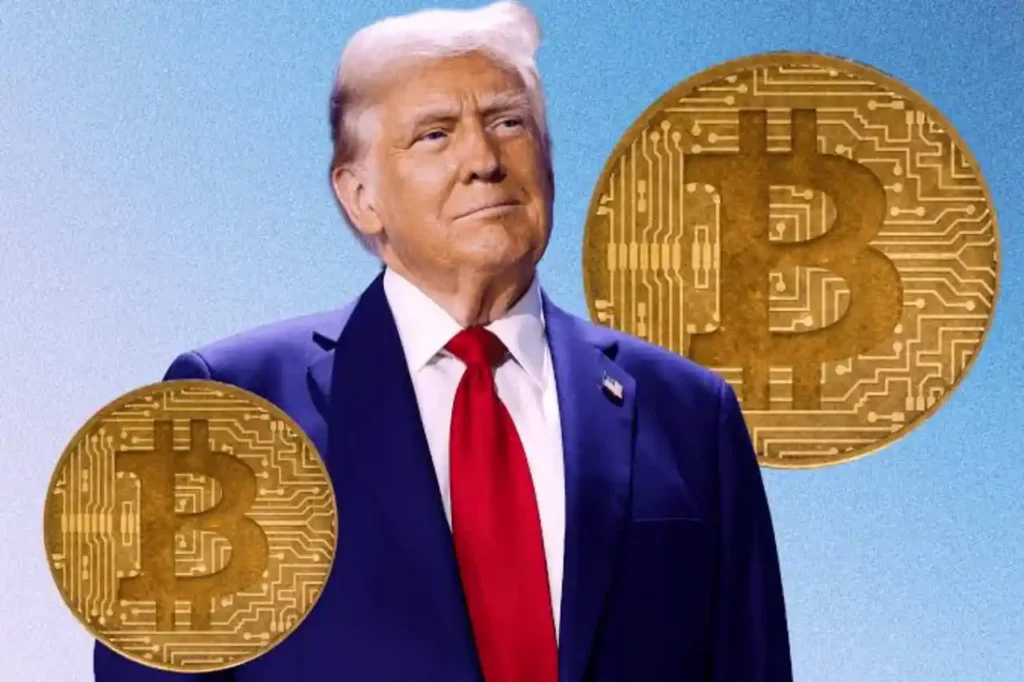
Trump’s decision to set up a Bitcoin Strategic Reserve has been muddled by several legal and political challenges. The main hurdle is the confusion regarding which department should oversee the workings of the reserve and which department has the legal authority to do so. President Trump’s proposed U.S. Strategic Bitcoin Reserve has stalled due to bureaucratic infighting over agency control, intense price volatility, and ethical scrutiny regarding his immense personal financial ties to the cryptocurrency market.
Before we move on to understanding the challenges related to the formation of the strategic Bitcoin reserve in the US, let us discuss its scope.
Scope of the Strategic Bitcoin Reserve in the US
The U.S. Strategic Bitcoin Reserve was established via an executive order in March 2025 to function as a sovereign long-term store of value. The primary scope of this reserve was to consolidate, custody, and hold forfeited Bitcoin rather than to liquidate it through standard auctions.
Here are some important parameters that determine the scope of the Bitcoin reserve.
- The reserve is capitalized by civil and criminal forfeitures managed by agencies like the Department of Justice. The reserve currently holds roughly 328,372 BTC.
- The current executive framework for the strategic reserve requires any additional Bitcoin to be acquired through budget-neutral means while avoiding direct taxpayer-funded purchases.
- Congressional bills, such as the Bitcoin Act, propose expanding the scope of the Bitcoin reserve to systematically purchase 1 million Bitcoin over five years. They intend to make it a 20-year national economic hedge.
- The proponents of the Bitcoin reserve intended to use it as a hedge against inflation, reduce sovereign debt, and maintain U.S. Dollar dominance. However, this strategy has faced criticism from various corners over Bitcoin’s price volatility.
The Legal and Political Delays in Setting Up the Reserve
The setting up of the strategic Bitcoin reserve was not an easy process, as was initially estimated. Here are some legal and political aspects that have caused the delay in setting up the strategic Bitcoin reserve in the United States.
Judicial and Administrative Delays
A major issue related to the Bitcoin reserve is the clash between the federal agencies over who should legally hold and manage the digital assets. While the Treasury Department was originally slated to oversee the reserve, the Commerce Department later emerged as a contender. The second jurisdictional issue is regarding whether the US government has the right to hold a large amount of Bitcoin indefinitely. The Justice Department’s Office of Legal Counsel is reviewing the regulatory framework to determine this issue amidst the existing asset forfeiture laws and Bitcoin’s extreme price swings.
Lack of Formal Legislation
President Trump’s initial plans regarding the setting up of the Bitcoin reserve were to pass an executive order in this regard. However, after thorough considerations, many legal experts have opined that a formal, binding legislation was required to constitutionally secure and regulate the reserve. Two of the core legislations in this regard, namely the BITCOIN Act and the ARMA Act, are still under consideration by the US Congress. Unless these acts are passed, it is impossible to make formal legislation regarding the strategic Bitcoin reserve.
Personal Conflicts of Interests
During Trump’s second term in office as the President of the US, he declared that a major chunk of his personal income and the income of his family members came from cryptocurrency ventures such as World Liberty Financial. Many lawmakers, including Senators Elizabeth Warren and Richard Blumenthal, have called for hearings and investigations into potential conflicts of interest, arguing that White House policies favoring Bitcoin could disproportionately benefit the president’s private financial portfolio.
Economic and Custody Concerns
The highly volatile nature of cryptocurrencies such as Bitcoin is not something that can be taken for granted. Many legal and financial experts are apprehensive about holding such a volatile asset as a country’s official reserve for the long-term. They fear that a market crash could obliterate billions in government-held value. Moreover, the executive order in this regard strictly requires the reserve to be built “budget-neutrally” using only seized and forfeited assets, limiting the government’s ability to aggressively buy and stabilize Bitcoin without creating taxpayer burdens.
The Bottom Line
The setting up of a Bitcoin reserve using the currencies forfeited from civil and criminal procedures was an innovative idea, but its real-world implementation is still under the scanner. There are several legal and political hurdles that the US legislators should overcome before the Bitcoin reserve takes shape. The legislative efforts to formalize the permanence of the strategic Bitcoin reserve have faced delays due to jurisdictional disputes regarding legal authority over such volatile reserve assets. Strong efforts and will on the part of the legislators are needed to overcome these hurdles and make the Bitcoin reserve a reality.