
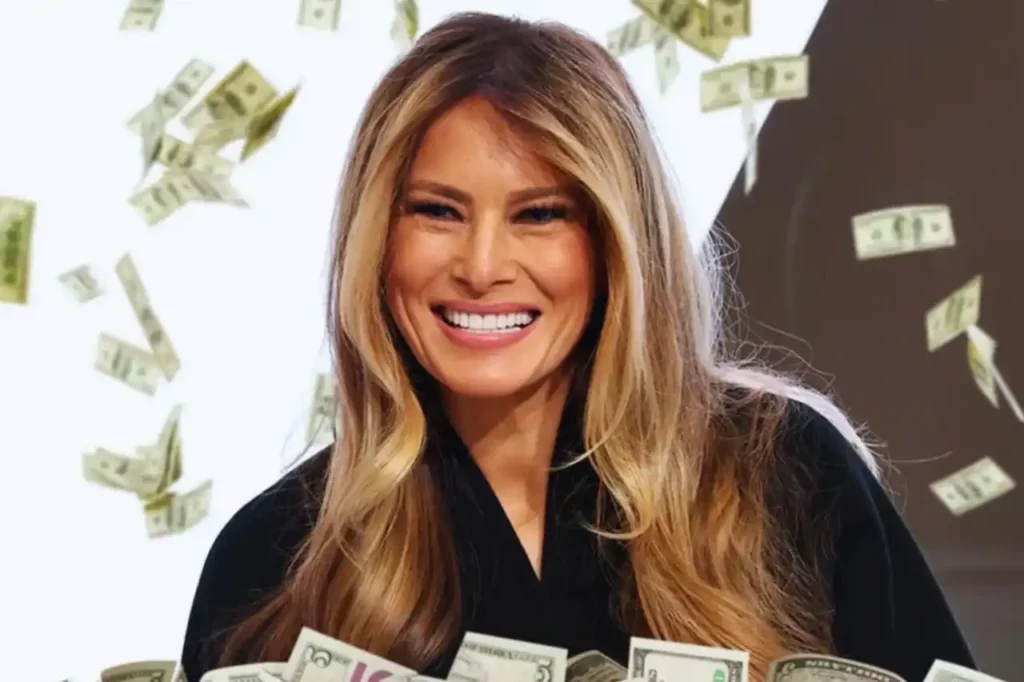
The intersection of celebrity branding, blockchain technology, and personal finance has reached a new milestone. Recent financial filings from 2026 reveal that former First Lady Melania Trump generated more than $6 million in income from non-fungible tokens (NFTs) and digital collectibles over the course of 2025. This substantial figure, which marks a significant surge in her digital asset earnings, provides a compelling case study on how high-profile figures navigate the volatility of the crypto market.
While the broader NFT market has faced cooling interest and fluctuating valuations since its 2021-2022 peak, Melania Trump’s ability to monetize her digital footprint demonstrates that individual brand equity rather than purely speculative market trends can serve as a primary driver of revenue.
The Financial Landscape: A Breakdown of 2025 Earnings
According to disclosures filed in mid-2026, Melania Trump’s total annual income climbed to nearly $17 million. This total, while bolstered by multiple revenue streams, relies heavily on her ventures in media and technology. Specifically, her income is categorized as follows:
- Licensing and Media: Approximately $10.7 million originated from the licensing of the documentary “Melania.”
- Digital Assets: Over $6 million was accrued directly from the sale of NFTs and various digital collectibles.
- Literary Endeavors: Her memoir contributed an additional $521,161 to her total earnings.
The $6 million in NFT-related income represents a nearly 28-fold increase compared to her previous year’s performance in this sector. For observers of the digital asset space, this growth indicates a strategic evolution. Rather than relying on the hype-driven “gold rush” phase of 2021, the former First Lady has successfully transitioned to a model of consistent, brand-integrated digital sales.
The Evolution of Melania Trump’s NFT Strategy
Melania Trump’s entry into the blockchain ecosystem began in December 2021 with the launch of “Melania’s Vision,” a digital portrait of her eyes minted on the Solana blockchain. At that time, the project was framed through the lens of her “Be Best” initiative, with proceeds earmarked for children in the foster care system.
From High-Stakes Auctions to Mass-Market Collectibles
Her initial foray into the market was characterized by high-profile, high-value experiments. The “Head of State” collection in 2022 notably bundled a physical, historically significant item the white hat she wore during a 2018 state visit with French President Emmanuel Macron with a watercolor painting and a corresponding NFT.
This auction, however, highlighted the inherent friction between legacy auction models and the nascent crypto market. While the collection aimed for a $250,000 opening bid, crypto market volatility ultimately saw the item sell for roughly $170,000. During this period, the project also faced intense media scrutiny regarding blockchain transparency. Reports from entities like Bloomberg and Vice noted that the winning bid originated from a wallet linked to the project’s own creators, an observation that ignited a broader public debate about “wash trading” and the ethics of celebrity-led NFT sales.
A Shift in Focus
Following the early challenges of 2022, the strategy shifted toward more accessible price points and mass-market appeal. Collections such as the “POTUS NFT Collection” and “The 1776 Collection” moved away from the fine-art auction format, offering lower-cost, patriotic-themed assets at $50 per unit. This transition mirrored a larger shift in the industry, where “utility-lite” collectibles and digital merchandise replaced the search for million-dollar single-edition tokens. By prioritizing volume and brand engagement over speculative scarcity, the strategy successfully buffered against the cooling market conditions that decimated many other NFT projects.
Analyzing the “Cooling Market” Paradox
The primary question facing financial analysts remains: How did Melania Trump achieve $6 million in sales while the broader NFT market faced a significant downturn?
The answer lies in the distinction between “market-dependent assets” and “brand-dependent assets.” Most NFT projects in 2021 derived value from speculative trading, where the asset’s worth was tethered to market-wide volatility. When the market cooled, these projects lost their liquidity.
Conversely, Melania Trump’s digital collectibles function as a hybrid of merchandise and digital memorabilia. Buyers in her ecosystem are less interested in “flipping” assets for a profit and more interested in supporting a public figure or participating in a specific brand community. Because these items are priced accessibly often around the $50 mark they function more like digital souvenirs than financial instruments. By bypassing the need for speculative demand, the platform sustains revenue even when the broader crypto market is stagnant.
Blockchain Transparency and Public Scrutiny
The transparency of the Solana blockchain ensures that all transactions remain public, a feature that has served as a double-edged sword for the project. While it allows for accurate accounting of revenue, it also invites persistent oversight.
The controversy surrounding the 2022 auction served as a crucial learning moment. Critics pointed to the ease with which digital wallets can be used to obfuscate the origin of funds, leading to allegations of self-dealing. In response, representatives for the former First Lady consistently maintained that the transactions were facilitated on behalf of anonymous third-party buyers, a standard practice in traditional high-end auction houses. Regardless of the controversy, the resilience of the brand is evident in the 2025 financial disclosures, which prove that the digital project moved past initial public relations challenges to become a reliable revenue engine.
The Future of Celebrity Digital Assets
The financial success of 2025 positions Melania Trump as a notable figure in the “creator economy” of digital assets. By diversifying her portfolio into documentaries, literary works, and digital collectibles, she has created a self-sustaining ecosystem where the brand serves as the glue holding disparate revenue streams together.
For other public figures and brands looking to enter the digital space, the takeaway is clear: success is rarely found in the technology itself, but in the ability to curate assets that align with a pre-existing, loyal audience. As the market for digital collectibles matures, the focus will likely continue to shift away from the speculative excesses of the early 2020s and toward the professionalization of digital merchandise.
Melania Trump’s $6 million result in a cooling market is not merely a testament to the popularity of her digital products it is a case study in how to leverage the transparency and reach of the blockchain to build a robust, modern business model that transcends the ups and downs of cryptocurrency valuations.
Also Read: How Trump Earned $1.4 Billion From Crypto in 2025: Complete Earnings Breakdown