
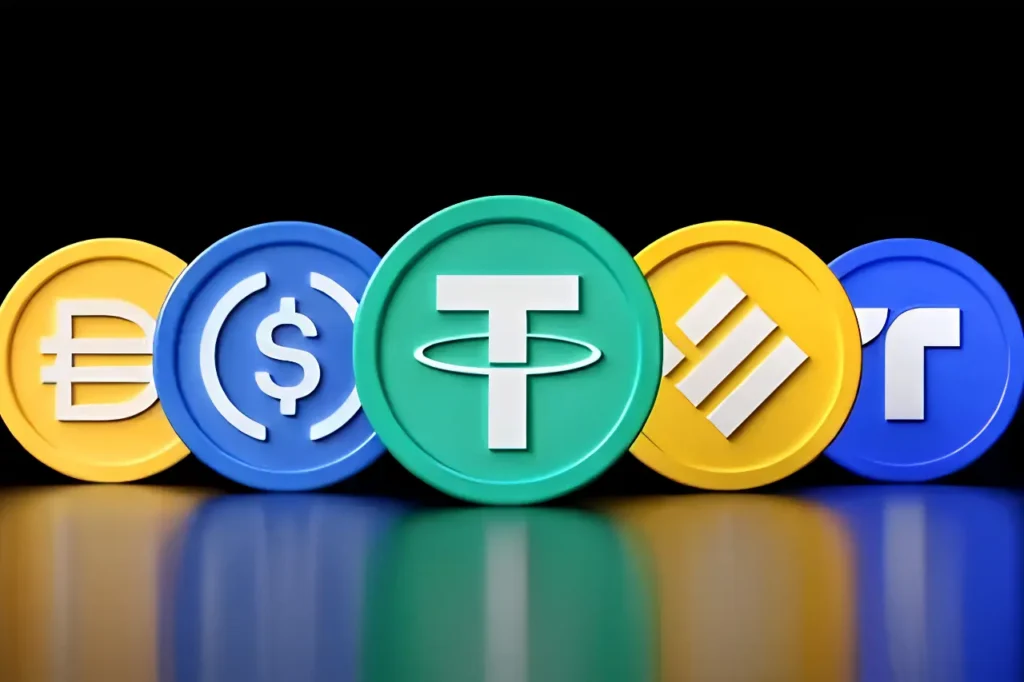
The stablecoin market has been falling since its high market capitalization in May 2025. There has been an approximate decline of 10 billion, making it the largest drawdown since 2022. Popular stablecoins such as USDT and USDC have fallen by ~6 billion and ~ 7 billion, respectively. Because these two coins make up the bulk of the total stablecoin supply, the decline in their market capitalization has had a profound impact on the sector as a whole.
Key Drivers Behind Stablecoin Market Capitalization Drop
Stablecoin market cap fluctuations primarily reflect shifting investor demand for liquidity and broader macroeconomic yields. When the broader cryptocurrency market experiences prolonged bearish phases or low volatility, capital rotates out of stablecoins as investors seek yield or deploy funds, driving the overall market cap down.
The key drivers behind the fall in the market capitalization of stablecoins are given below.
- Macroeconomic Yields: Central bank interest rates impact the prospects of stablecoins. When the interest rates are adjusted in such a way that traditional savings accounts or treasury bills offer high, risk-free yields, investors often redeem stablecoins for fiat to earn interest in the traditional financial system. These macroeconomic yield prospects determine the market cap of stablecoins.
- Capital Rotation: It is a common trend that traders exchange stablecoins for fiat during quieter periods in decentralized finance (DeFi) or lower volatility for major cryptocurrencies like Bitcoin. Conversely, a spike in trading activity typically reverses this flow, pushing the market cap higher. That means the stablecoin market frequently sees capital rotation. The current drop in market capitalization can be attributed to this process.
- Regulatory Pressures: The global regulatory landscape for stablecoins is evolving. Legislation such as the Markets in Crypto-Assets (MiCA) regulation in the European Union has forced some exchanges and platforms to delist specific unbacked or non-compliant stablecoins. This has caused localized drops in the circulating supply of specific stablecoins, contributing to the overall drop in market cap.
- Long-Term Utility: Despite short-term contractions such as this drop in market cap, stablecoins maintain a strong long-term growth trajectory. They serve as the foundation for global remittances, provide a stable medium of exchange in regions with high inflation, and remain the primary entry or exit vehicle for crypto trading.
An Overview of the Global Stablecoin Market
The global stablecoin market is rapidly expanding with a gross value of approximately $275 billion. Stablecoins are mainly used by cryptocurrency traders, people in developing economies seeking a hedge against inflation, and businesses making cross-border payments. It is dominated by U.S. dollar-pegged assets, which account for over 95% of the total supply, primarily serving as liquidity pools and cross-border payment rails.
The global stablecoin market is highly consolidated, with Tether (USDT) and USD Coin (USDC) accounting for roughly 85% to 90% of the entire market capitalization. Tether remains the clear leader, boasting a market cap of over $160 billion and controlling over 65% of the market share. Stablecoins have commendable institutional backing. Since stablecoins generally hold their reserves in cash and highly liquid U.S. Treasuries, they have quietly become massive holders of sovereign debt.
These coins are also known for their real-world utility. Apart from the usual crypto trading, stablecoins are now utilized by global neobanks, remittance platforms, and underbanked populations in emerging economies, such as parts of Latin America and Africa, seeking protection from local hyperinflation.
Future of Stablecoins in the Light of the Drop in Market Cap
The recent $10 billion drop in the global stablecoin market cap is largely a temporary correction reflecting reduced on-chain liquidity rather than a structural failure. This implies that the future of the stablecoin market is unrelated to this development. Moving forward, stablecoins are expected to scale beyond niche crypto-trading into heavily regulated, mainstream cross-border settlement and treasury infrastructure.
While giants like Tether’s USDT and Circle’s USDC still control the lion’s share of the market, new regulated issuers such as Paxos’ Global Dollar (USDG) and consortiums like OpenUSD are also growing big in this industry. Regulations like the U.S. GENIUS Act and the EU’s MiCA have helped stablecoins shift from the periphery into regulatory frameworks designed to mandate full 1:1 reserve backing and guaranteed redemption rights. This reduces risk for mainstream businesses but heavily restricts issuers from passing yields onto token holders.
Another futuristic development is the integration of stablecoins into real-economy payments by players such as Visa, Mastercard, and Stripe. They are acquiring or building stablecoin settlement networks to bypass the friction and high fees of legacy correspondent banking. While USD-denominated stablecoins still make up 99% of the market, non-USD stablecoins are beginning to serve regional needs, offering localized settlement layers that reduce foreign exchange risks for B2B transactions.
The Bottom Line
Despite the recent fall in the market cap of stablecoins, the industry is expected to thrive for a long time. This is only a temporary phenomenon, and the market will recuperate. Other than the prominent USDT and USDC, other USD-pegged stablecoins and those pegged to other stable fiat currencies are emerging. This is also a boost to the industry at large. While there has been a glitch in the short-term growth of stablecoins, their long-term prospects are intact.